


Frequently Asked Questions
What size training collar does my dog need?
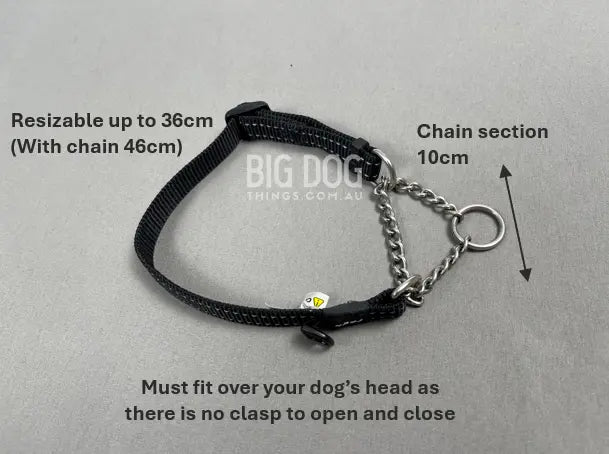
Measure your dog's neck where the collar naturally sits, then add a couple of centimetres for comfort. Medium fits necks 38–42cm and Large fits 44–50cm — both have a clasp with a safety lock, and if your dog is between sizes, size up. The Small is designed for puppies and works differently: it has no clasp and slips over the head, so make sure your pup's head circumference fits within 46cm. All sizes adjust down for a snug fit.
How does a chain and nylon training collar work?
It's often called a half-check or martingale-style collar. The nylon strap sits comfortably around the neck, and the short chain segment tightens slightly — but only to a limit — when your dog pulls. That gentle, limited feedback helps reinforce loose-lead walking without the full constriction of a traditional check chain, so there's no ongoing strain on the neck or throat.
Is this training collar safe for puppies?
Yes — it's lightweight and the constriction is limited, which is why the Small size is designed with puppies in mind. That said, any training collar works best (and safest) with guidance from a professional trainer, especially with a young dog. Get the technique right early and you'll save yourself years of being dragged down the street by a full-grown big dog.
Can my dog wear the training collar all the time?
No — training collars are for supervised training sessions and walks only. Take it off at home, in the crate, and any time your dog is playing with other dogs, as the chain segment can catch and become a safety hazard. For everyday wear, a flat collar with ID tags is the right choice.
What's the difference between this and a check chain (choke chain)?
A full check chain can tighten without limit, which risks injury if used incorrectly. This collar only constricts to a set point — the nylon strap does most of the work, and the chain provides brief, gentle feedback. It's a softer, more forgiving tool, which makes it a better fit for most owners working on pulling.
Do I need a trainer to use a training collar?
We strongly recommend it. Timing and technique matter more than the tool itself — used incorrectly, any training collar can confuse your dog or cause discomfort. A session or two with a professional trainer will show you correct fit, positioning (high on the neck), and how to use it so your dog actually learns, rather than just tolerating corrections.