




Frequently Asked Questions
How does a head control collar actually work?
It redirects your dog's pulling power from their strong shoulders to their nose. When your dog tries to lunge or surge ahead, the gentle pressure turns their head back towards you — so instead of dragging you down the street, they end up looking at you. It's physics doing the hard work, not force.
Is a head collar the same as a muzzle?
No. A muzzle stops a dog biting or eating; a head collar does neither. Your dog can pant, drink, bark, fetch and carry things completely normally. It sits over the nose to guide direction only — it's a steering tool, not a restraint.
Will my dog hate wearing it?
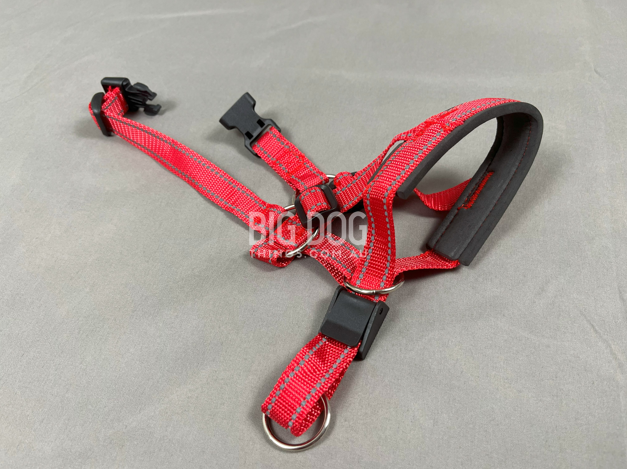
Most dogs need a little time to get used to having something across the nose, and some will paw at it at first — that's normal. The trick is to introduce it slowly with treats over a few short sessions rather than going straight for a full walk. The padded neoprene noseband is there to keep it comfortable while they adjust.
Is it cruel or harsh on the dog?
Not at all — that's the whole point of it. A head collar is a force-free alternative to harsher correction tools. It works through gentle redirection, not pain or pressure on the throat, which is why it's a popular choice for big strong dogs who pull.
What size should I get for my dog?
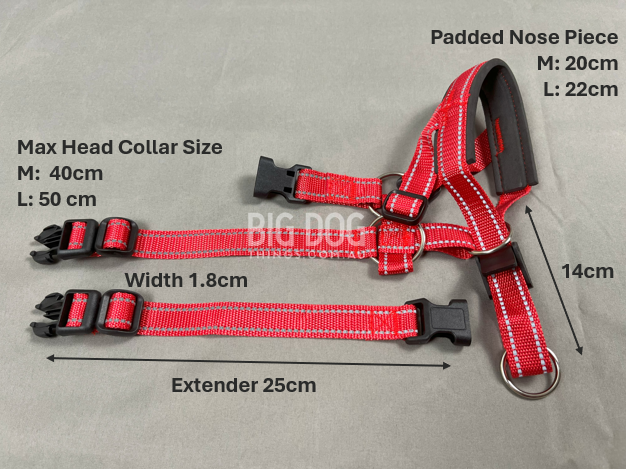
We stock M ($39.95) and L ($43.95). Size is based on your dog's head and snout, not just body weight, so it's worth measuring around the nose and behind the ears before ordering. If you're between sizes or unsure, email jen@bigdogthings.com and we'll help you get it right.
Can I use a head collar on its own to fix pulling forever?
Think of it as a training aid, not a permanent fix. It gives you control while you teach your dog to walk calmly, and works best paired with a long lead and reward-based training. The goal is a dog that eventually walks nicely without needing it.