

Frequently Asked Questions
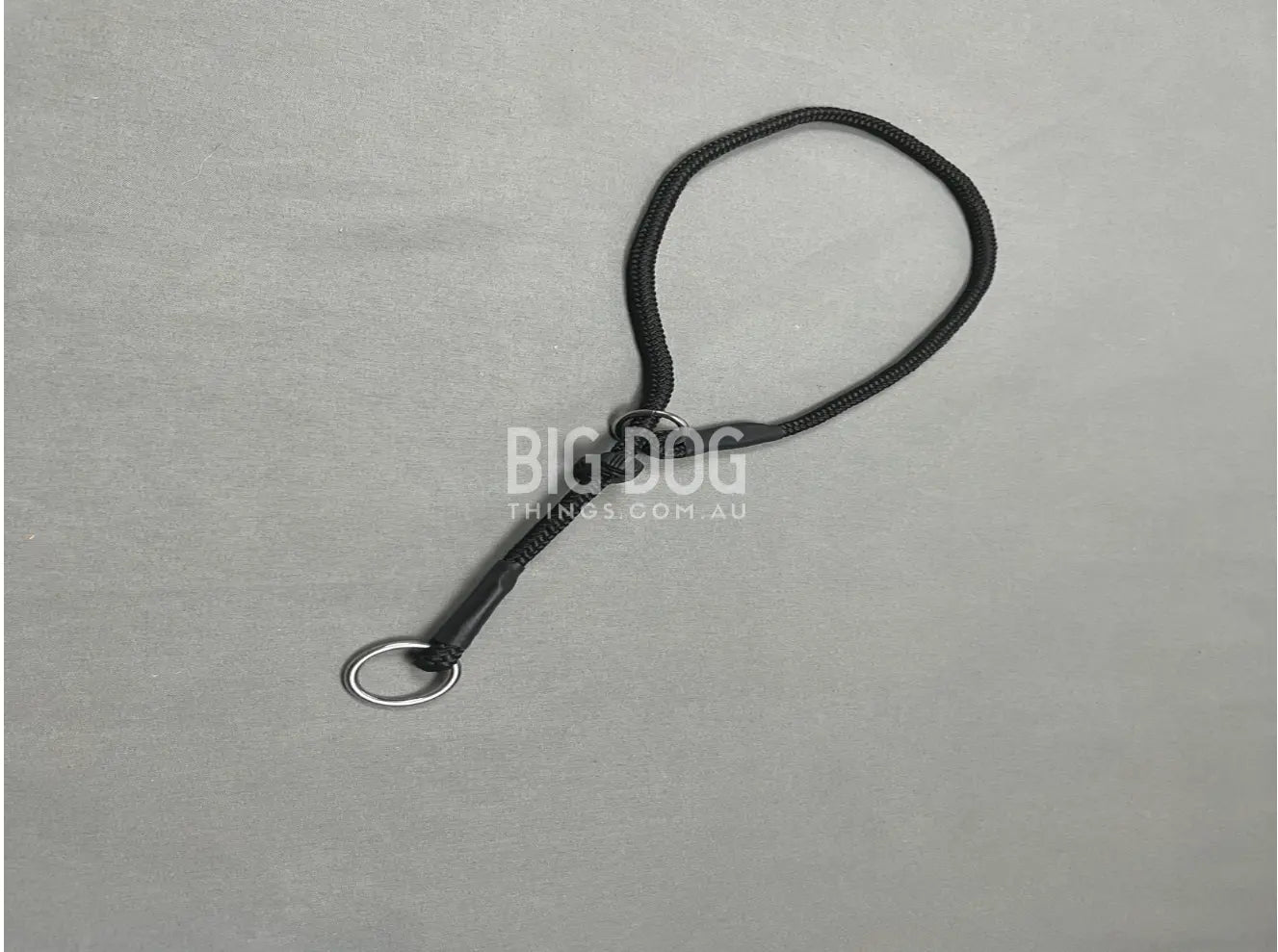
How does a slip collar work?
It applies gentle, controlled pressure when your dog pulls, and releases the moment they ease off and return to your side. That on/off feedback helps your dog connect "pulling = pressure, walking nicely = comfort" — a simple, natural way to learn loose-lead walking.
Is a slip collar safe for my big dog?
Used correctly, yes. It should sit high on the neck, fit properly for your dog's size, and only ever tighten briefly in response to pulling — never left tight. Like any training collar, it's a tool for active, supervised walks and training sessions, not for leaving on around the house or for tie-ups.
What size do I need?
We stock a wide range — 35cm, 40cm, 45cm, 50cm, 52cm, 60cm and 65cm — so there's a fit for everything from a medium dog up to a broad-necked big breed. Measure around the widest part of your dog's neck and size up from there. If you're unsure, get in touch and we'll point you to the right length.
What's the "42cm – reduced price as imperfect" option?
Exactly what it says — a 42cm collar with a small cosmetic imperfection, offered at a reduced price ($12.95). It works just as well as the others; it simply didn't pass our look-perfect test, so we've passed the saving on rather than bin a good collar.
Is a slip collar suitable for puppies or only adult dogs?
It's a great starting tool for teaching loose-lead walking early — Jen first used one with Mack as an older pulling puppy (about 9 months old). If you're unsure, check with your local dog trainer or vet.
Slip collar or head control collar — which should I choose?
A slip collar suits dogs who need a light reminder not to drift ahead. A head control collar is better for serious, determined pullers who need more steering. If your dog drags you down the street, start with the head collar; if they mostly walk well but wander, the slip collar is a simpler option.